
|
|
By Peter Corcoran
|


Environmental Liability Insurance is often viewed as something that only concerns large industrial businesses. In practice, environmental incidents can affect organisations of many different sizes and sectors, often arising from routine operations, storage arrangements, equipment failures or fire events.
At Arachas, our discussions with manufacturing and food production businesses regularly uncover environmental exposures that have never been formally reviewed or are assumed to be addressed elsewhere within the insurance programme.
In many cases, this isn't because the business has done anything wrong. Operations evolve, sites expand, production processes change and environmental responsibilities increase over time. As a result, the environmental risk profile of the business today may look very different to what it was when insurance arrangements were originally put in place.
We've also seen growing awareness of environmental risk in recent years, driven by increasing regulation, greater scrutiny from the Environmental Protection Agency (EPA) and a wider understanding of the financial, operational and reputational consequences that can follow an environmental incident.
For many manufacturing and food production businesses, the question is no longer whether environmental risk exists, but whether that risk is fully understood and appropriately addressed.
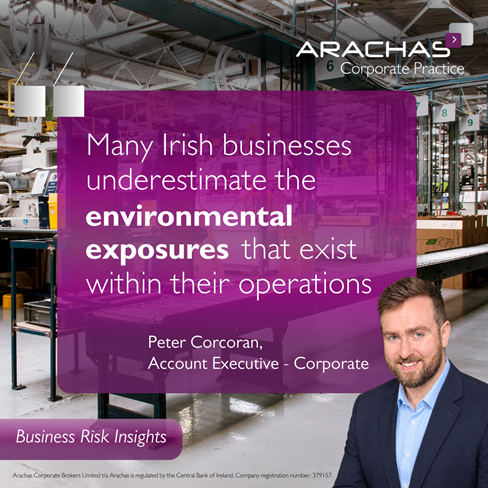
What Is Environmental Liability Insurance?
Environmental Liability Insurance, sometimes referred to as Environmental Impairment Liability (EIL) Insurance, is a specialist insurance solution designed to address liabilities and costs arising from pollution incidents and environmental damage.
It is intended to help businesses manage environmental exposures and can include protection against liabilities, remediation requirements and costs associated with environmental incidents.
Environmental exposures can arise from a single identifiable event, such as a spill or leak, but they can also develop gradually over time, often without businesses fully appreciating the potential implications until an issue is identified.
At Arachas, we often find that the most important starting point is understanding the environmental exposures that exist within a business and how those exposures may have changed over time. Our Corporate Practice team works with manufacturing and food production businesses across a wide range of sectors, helping them assess environmental risks, challenge assumptions and ensure their risk management and insurance arrangements remain aligned with their operations.
Why Are More Businesses Reviewing Their Environmental Risks?
10 years ago, Environmental Liability Insurance was a relatively niche discussion for many businesses. Today, we are finding that more manufacturing and food production organisations are actively reviewing their environmental exposures and asking whether their existing insurance arrangements remain fit for purpose.
At Arachas, we are seeing this being driven by a combination of factors including regulation, changing operations, acquisitions, facility expansions and increasing awareness of environmental responsibilities.
Environmental Protection Agency (EPA) Enforcement Keeps Environmental Risk in Focus
Environmental compliance remains a significant focus for businesses operating in Ireland. The Environmental Protection Agency (EPA) continues to publish enforcement actions and prosecutions across a range of sectors, including manufacturing, agriculture and the food and drink industry. These cases serve as a reminder that environmental risk is not solely an issue for traditionally high-risk industries.
For many manufacturing and food production businesses, environmental responsibilities extend beyond compliance obligations. They also include understanding how an environmental incident could impact operations, neighbouring properties, local waterways, regulators, customers and wider stakeholders. While most organisations invest considerable time and effort in environmental management, recent EPA activity highlights why environmental risk remains an important topic during both business reviews and insurance discussions.
Do I Need Environmental Liability Insurance if I Have Public Liability?
One of the most common assumptions we encounter is that Public Liability insurance automatically addresses all environmental exposures. Public Liability insurance remains an important component of any insurance programme and is primarily intended to address third-party claims involving bodily injury or property damage. However, environmental incidents can create additional exposures that businesses may not initially consider.
Following a pollution or contamination event, a business may face costs relating to investigation, remediation, regulatory requirements, environmental damage and operational disruption. Depending on the circumstances and policy wording, Environmental Liability Insurance may provide protection for a broader range of environmental exposures, including clean-up costs, business interruption losses and certain environmental liabilities arising from pollution incidents. Pollution incidents, remediation requirements, regulatory intervention and environmental damage can all create exposures that require careful consideration.
The question is not necessarily whether a business already has Public Liability insurance, but whether it's environmental exposures have been properly identified and assessed. This is often where environmental risk reviews add the greatest value.
Environmental Incidents Can Create Wider Consequences Than Businesses Expect
One of the themes that frequently emerges during environmental risk discussions is that businesses often focus on potential third-party liabilities while overlooking some of the wider consequences that can arise following a pollution or contamination event.
Environmental incidents can have consequences that extend beyond third-party liability, including regulatory intervention, remediation costs, operational disruption and reputational impacts. Environmental risks are often associated with large industrial facilities. However, claims experience across the insurance market demonstrates that pollution and contamination events can occur in many different types of businesses.
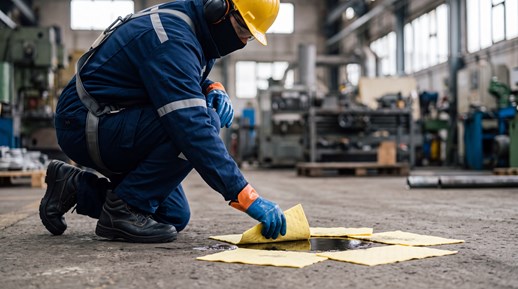
Examples have included:
* A construction project in Dublin City where concrete entered and blocked nearby sewage infrastructure, resulting in clean-up and remediation requirements
* Diesel spills from storage tanks entering nearby watercourses and resulting in significant mitigation and remediation costs
* Milk discharges from food production facilities causing contamination of local waterways and requiring regulatory investigation and clean-up
* Fires at commercial premises leading to contaminated firewater or the spread of hazardous materials beyond the site boundary
* Oil tank failures resulting in ground contamination and extensive clean-up requirements
These examples highlight that environmental exposures can arise not only from manufacturing processes themselves, but also from equipment failures, storage arrangements, fire events and day-to-day operational activities.
Fire incidents can also create significant environmental exposures. Contaminated firewater, debris and hazardous materials may migrate beyond the site boundary and impact neighbouring land, watercourses or environmentally sensitive areas. As a result, environmental liabilities can sometimes arise from incidents that businesses would not traditionally view as pollution events.
This is one of the reasons Environmental Liability Insurance has developed as a specialist area of insurance and why environmental risk reviews are becoming more common across manufacturing and food production businesses.
What Types of Businesses Should Consider Environmental Liability Insurance?
One of the biggest misconceptions we encounter is that Environmental Liability Insurance only applies to heavy industry. In practice, we regularly discuss environmental exposures with a much broader range of businesses.
Manufacturers, food production companies, logistics operators, engineering firms, warehousing businesses and companies operating under EPA licences can all have environmental exposures worth reviewing. Businesses operating under EPA licences may have additional environmental responsibilities and financial provision requirements that should also be considered as part of their wider environmental risk management strategy.
Our experience is that environmental discussions rarely stop at the issue initially identified. A business may begin by considering fuel storage, for example, only for the review to uncover additional exposures relating to drainage systems, waste handling, contractor activities or neighbouring land and watercourses. The nature of the exposure is often more important than the size of the business.
Risks Can Change as Businesses Evolve
Environmental risk is rarely static. One of the recurring themes we see during reviews is that insurance arrangements can remain largely unchanged while the business itself has evolved considerably. Facilities expand. Additional buildings are added. New contracts are won. Processes change. New materials are introduced.
As a result, the environmental risk profile of a business today may look very different to the risk profile that existed when cover was originally arranged. This can be particularly relevant for businesses operating under Environmental Protection Agency (EPA) licences, where regulatory requirements and environmental obligations can develop alongside the business.
Why Do Environmental Risk Reviews Matter?
Some of the most productive environmental discussions we have with clients are not initially about insurance. They are about understanding how the business operates, identifying where environmental exposures arise and reviewing whether anything has changed since the last assessment was carried out.
We've found that environmental reviews often uncover assumptions that have gone unchallenged for years.
They can help businesses:
* Better understand their environmental exposures
* Identify operational changes that may have altered their risk profile
* Review environmental responsibilities and obligations
* Consider whether their insurance arrangements still reflect the realities of the business
Environmental risk is a recurring discussion point for the Arachas Corporate team, particularly when working with manufacturing, food production and other businesses with potentially significant environmental exposures. Through environmental risk reviews and discussions with clients across Ireland, we help organisations better understand their exposures, challenge assumptions and assess whether their risk management and insurance arrangements remain aligned with the realities of their operations.
In many cases, the most valuable outcome is not necessarily the insurance recommendation itself, but the increased understanding of how environmental risk exists within the business and how those exposures may have changed over time.
Should Your Business Consider Environmental Liability Insurance?
Environmental Liability Insurance will not be relevant to every organisation, however, for manufacturing and food production businesses, understanding environmental exposures and how they are addressed within existing insurance arrangements is an increasingly important consideration. As environmental responsibilities, regulatory expectations and business operations continue to evolve, regularly reviewing environmental risks can help businesses identify potential exposures, challenge assumptions and make more informed decisions about risk management and insurance.
Through discussions with clients across Ireland, we regularly find that environmental risks are broader than initially expected, making regular reviews an important part of effective risk management.
The first step is understanding the environmental risks that exist within your business and whether your current risk management and insurance arrangements reflect those exposures.